How Elk Came Home to the Ozarks
Elk once ranged across Arkansas, but by the 1840s they had vanished from the state. For well over a century, the Ozark hollows held no bugle in the fall.
Between 1981 and 1985, a little more than one hundred Rocky Mountain elk were released along the Buffalo River. The land welcomed them back. Today the herd numbers in the hundreds, and the open hay meadows of Boxley Valley, long farmed and still pastoral, have become their favorite place to graze.
The return of a large animal to its native landscape is a quiet kind of restoration. When you watch these elk, you are watching an ecosystem remember itself.
The Language of the Bugle
If you visit in autumn, you may hear the herd before you see it. A bull elk bugle begins low, climbs into a high, whistling note, and ends in a series of grunts. It carries for long distances across an open valley, and in the cold air before sunrise it can raise the hair on your arms.
The bugle is a declaration. During the rut, mature bulls gather groups of cows and announce their presence to rivals. Their antlers, which can span several feet, are among the fastest growing tissues in the animal world. Each spring a bull grows a new set, sometimes adding close to an inch a day at the peak of growth, and each late winter he sheds them on the forest floor.
Watching that cycle unfold, season after season, in a valley that once had no elk at all, is a reminder of how much a landscape can heal when it is given time.
Where and When to Watch
Boxley Valley is a short, scenic drive from the Cabin, along Arkansas Highway 43 and Highway 21 near Ponca. The meadows sit right beside the road, so most visitors watch from their cars or from the designated pull-offs.
- Go at first light or late afternoon.
The elk feed in the open fields just after sunrise and again in the hour before sunset, then retreat into the woods during the middle of the day.
- Autumn is the season.
The rut runs from mid-September into November, when bulls are most visible and their bugling carries across the valley.
- Use the pull-offs.
Park only in designated roadside areas so traffic keeps moving and the herd stays calm.
- Keep your distance.
Elk are large, wild animals. Stay in or near your vehicle and bring binoculars or a long lens instead of walking closer.
- Hold your plans loosely.
Some mornings the meadows are full. Some mornings the herd stays in the trees. Either way, the fog lifting off the valley is worth the drive.
What Awe Does in the Body
There is a name for what happens in that silent car: awe. It is the feeling of standing in front of something vast, something that does not fit neatly into what you already know.
Awe turns out to be more than a pleasant emotion. Research on positive emotions has found that people who feel awe more often tend to have lower levels of interleukin-6, a signaling molecule involved in inflammation. The finding is correlational, so it cannot prove that awe lowers inflammation, but it points to something worth noticing: wonder and physiology appear to travel together.
Awe also shifts attention. Instead of narrowing onto a worry or a task, the mind widens to take in the scene. Many people describe a sense of their own problems becoming smaller and quieter. Breathing slows. The body leaves its guarded posture for a few minutes, and the nervous system gets a rare chance to stand down.
Dr. Leila Doolittle explores how the body moves from vigilance toward rest in Your Vagus Nerve Is Mostly Listening.
A Morning Plan From the Cabin
- Set an alarm for about an hour before sunrise and start the coffee while the meadow outside is still blue.
- Drive south toward Ponca with the windows cracked so you can hear the valley waking up.
- Pull off at a designated area in Boxley Valley and turn off the engine. Give your eyes a few minutes to find shapes at the edge of the trees.
- Watch without hurrying. Leave the phone in your pocket for the first ten minutes.
- Return to the Cabin for a slow breakfast on the porch, then spend the afternoon on the ranch trails, the springs, and the ponds.
Come Stay Near the Herd
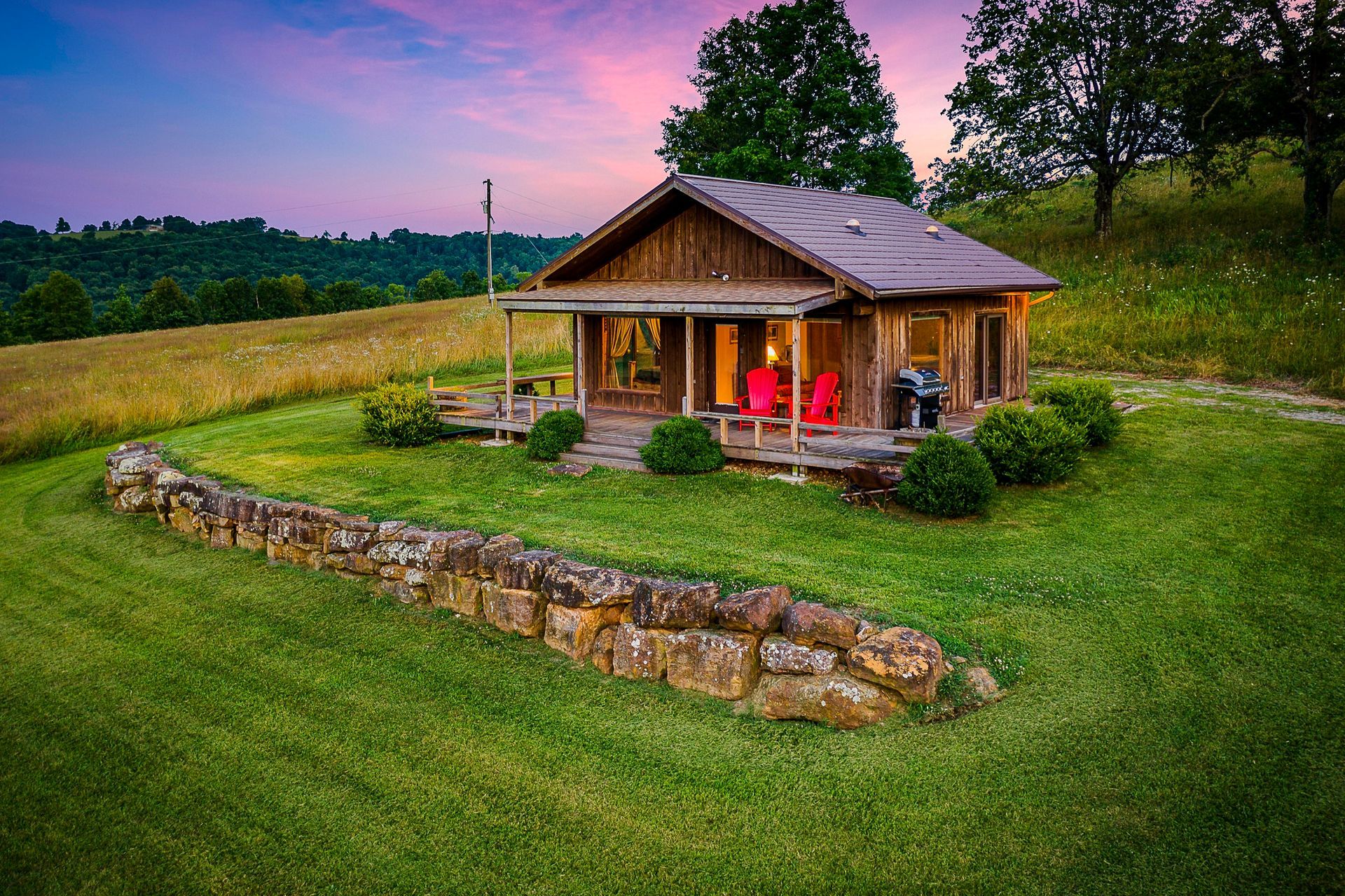
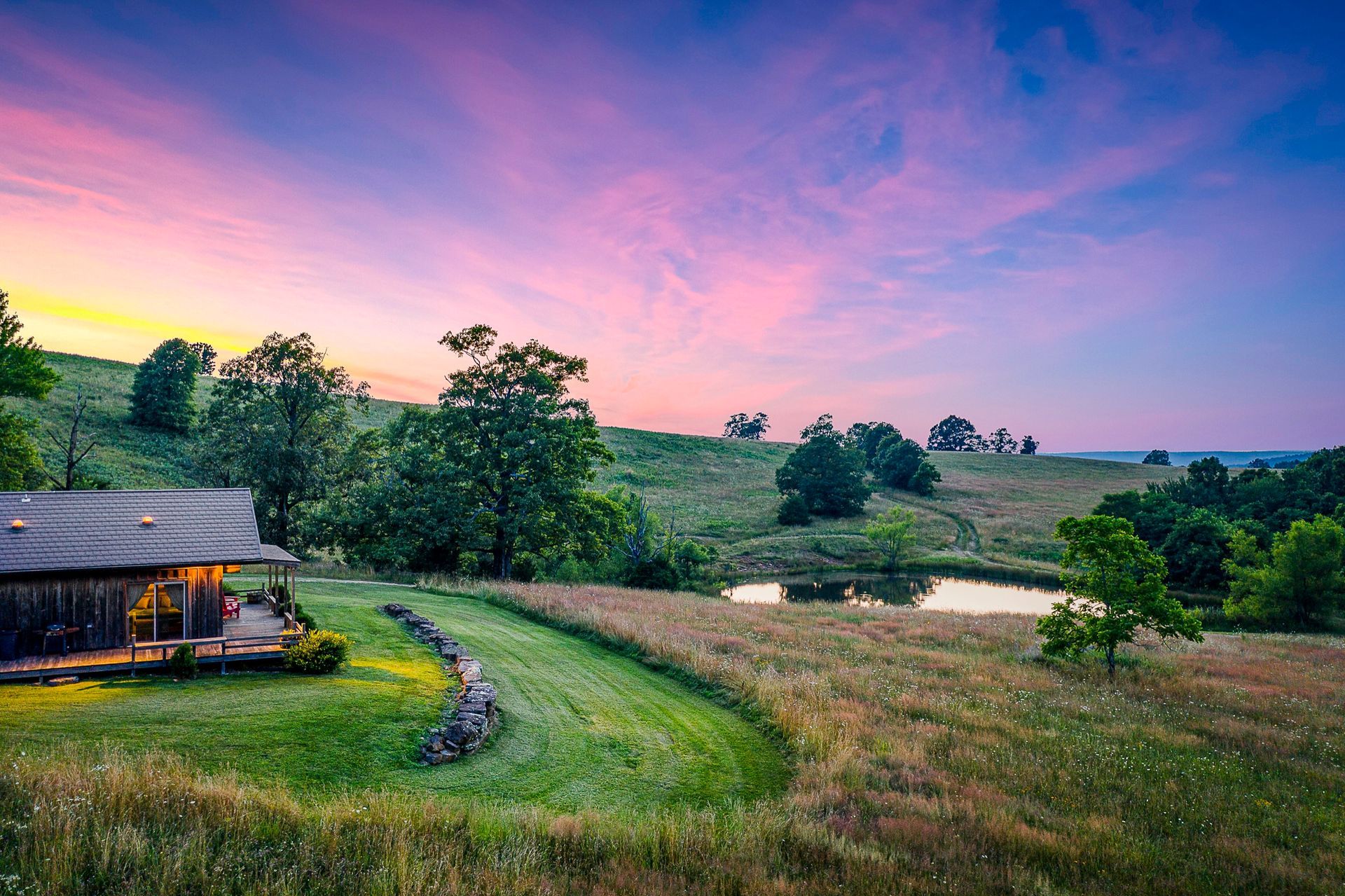
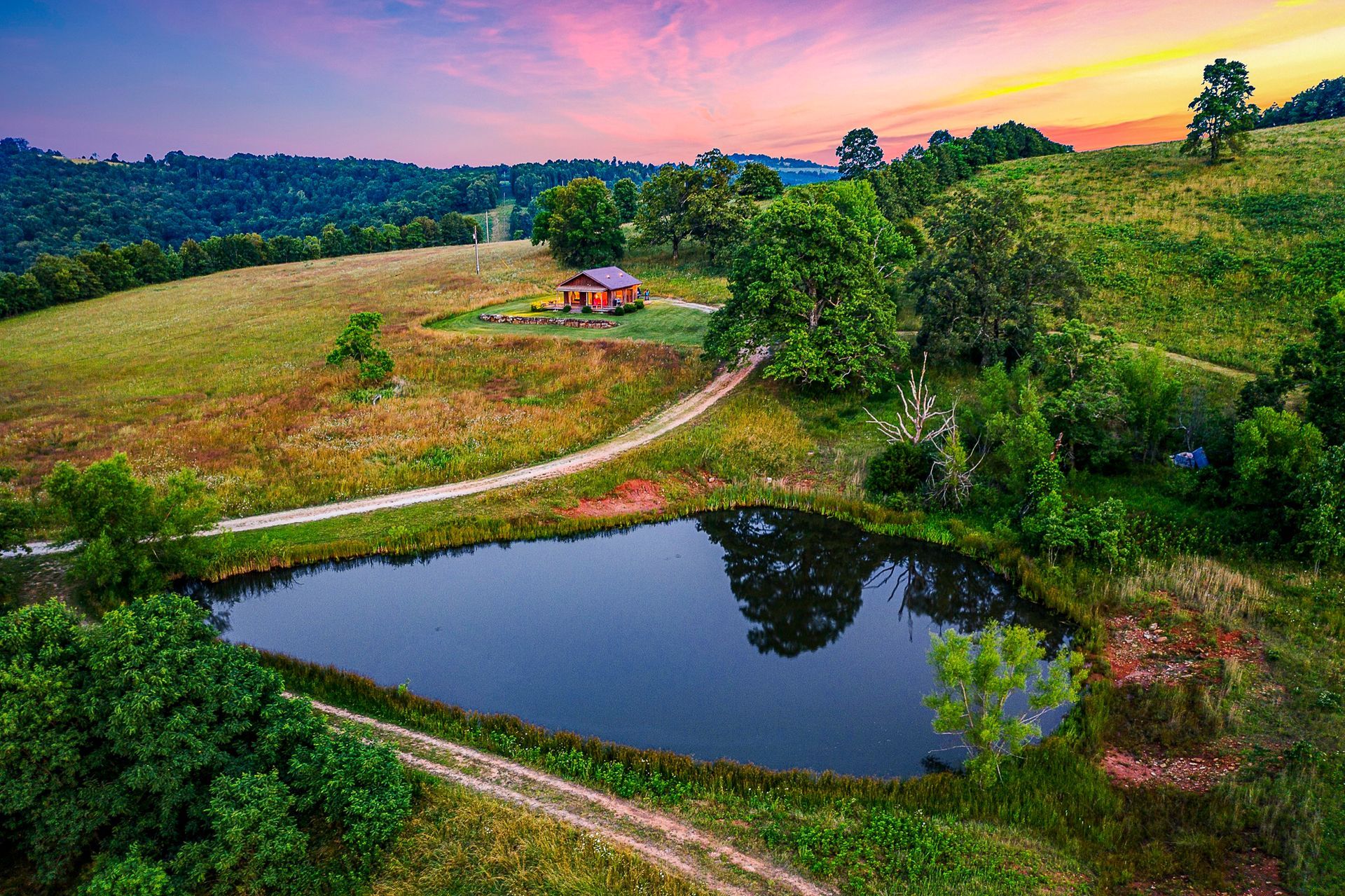
OZK Cabins sits on 550 private acres in the Arkansas Ozarks, less than five miles from the Buffalo National River, with the elk meadows of Boxley Valley a short drive away. Wake before dawn, watch the herd move through the fog, and come home to a quiet porch and a view that belongs only to you.
Let the land remind you how large and alive the world still is.
Book your reservation at ozkcabins.com.